an essay by matt ⭒ october 10, 2026
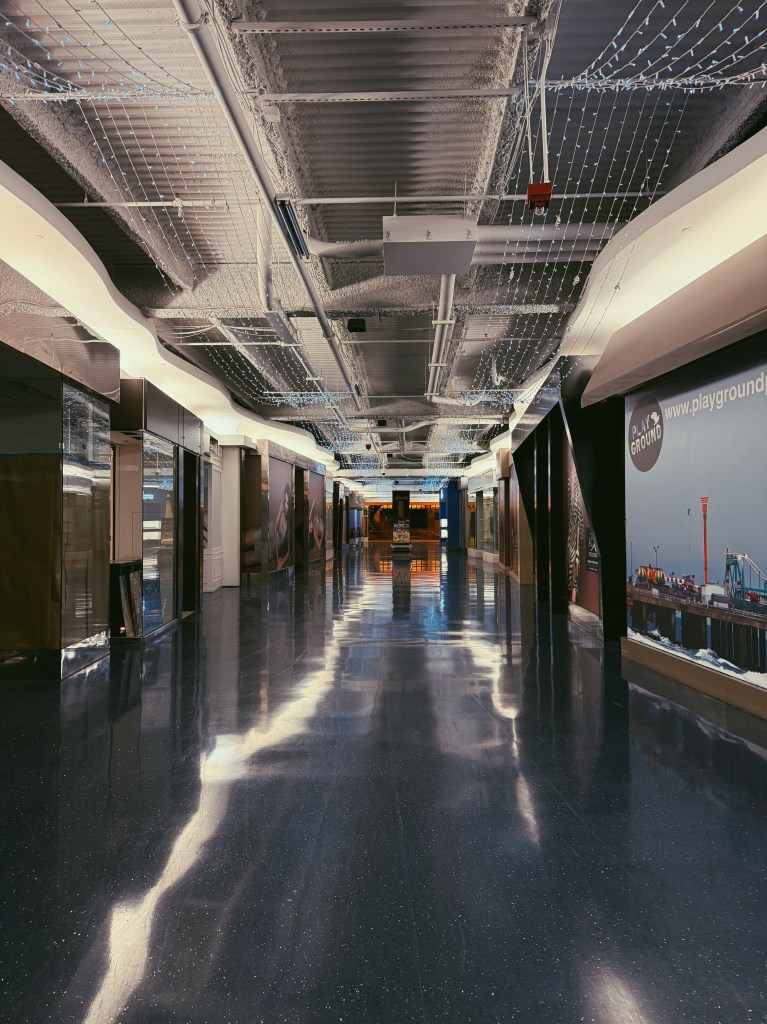
Photo 1: “Shopping under the stars” at the Playground Pier in August 2025, except there are no shops to be found here.
The story of a glass elevator, a musical fountain, and a magical waterfront mall that crumbled with my childhood. Welcome to the Playground Pier.
All photos taken on this page are my own unless specified.
reading time:
A Childhood Wonderland
We all have a place we faintly but fondly remember from our childhood that’s no longer there. And every so often, faded visions of that childhood “dreamland” float back into our mind, struggling to preserve its space in our memory, before we inevitably sacrifice it to make room for more mature thoughts.
For me, growing up in the suburbs of New Jersey in the early 2010s meant that those lost “dreamlands” came in all forms. Some I especially remember were the JumpZone arcade, the Route 18 teppanyaki buffet, and the wooden castle playground by the Hillsborough town hall. While half of that playground still survives today, the other half was demolished several years ago and replaced by a smaller, plastic playground that never felt the same. The occasional splinter and the burning metal slide on summer days made the old playground all the more special.
But on the topic of the “playground,” I had also learned to play—and loved to play—at a place most people would not expect children to wander around, that being Atlantic City, New Jersey. Ever since I stayed a night at the Caesars hotel for the first time, when I was only a little more than one, revisiting AC became a yearly—and sometimes even monthly—tradition. This fascination had nothing to do with gambling: neither of my parents were ever gamblers, and the casinos were actually the least memorable parts of my trips to AC every time.
I was simply captivated by everything each hotel had to offer: the eclectic decor, from the Roman theming of Caesars to the Western scenery of Wild Wild West, the elevators that could take you up twenty floors in twenty seconds, and the panoramic views out on the Atlantic Ocean from the hotel room. It was all quite chaotic for any child to handle, but my childhood imagination fell more in love with the chaos with every stay. And each time we headed back home on the Atlantic City Expressway, sometimes early in the morning before a school day, I found myself looking out the rear window, watching the AC skyline slowly shrinking from view. As vulgar as it might sound for a child to love Atlantic City in the way I did, it really was my playground.
But along the boardwalk, there was a “Playground” that I miss more than anything else in the city: one that, unlike the Hillsborough playground, is now completely lost to time. It was not a traditional playground in the way one would expect: it was the Playground Pier, which more people may have known as The Pier Shops at Caesars.
Again, contrary to one’s expectations, the pier was more than your usual carnival pier down the Jersey shore. It was actually a four-story, fully-enclosed luxury shopping mall with all the attractions one could ever imagine. In addition to exploring the hundreds of shops, you could spend an afternoon playing glow-in-the-dark mini golf, grab dinner at a ’50s-style retro-futuristic diner, and enjoy the evening by a huge musical fountain with water and light shows every hour. It had all the sights and sounds a child like me dreamed of—and more. I didn’t fully know it at the time, but looking back, there really was no other place like the Playground Pier. At just two years old, I had found Wonderland.
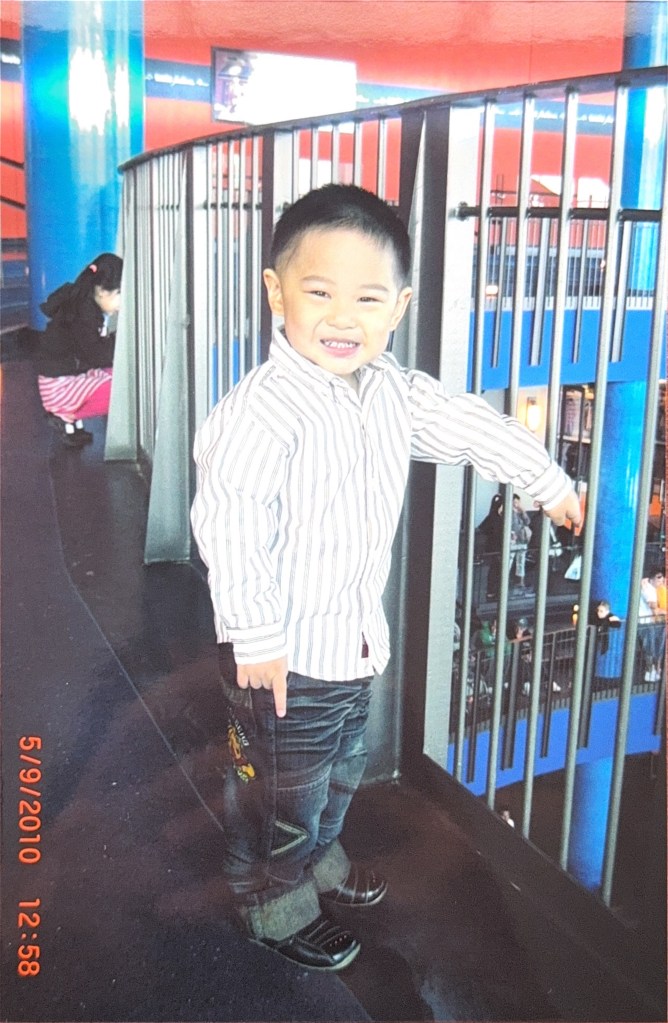
Photo 2: Two-year-old Matt stands on the third-floor deck with the musical fountain two floors below in 2010. Photo credit goes to my mother.
The Life of the Pier
Though I could continue reminiscing about the Playground Pier and nostalgically reflect on its glory days from the present, that would not do it any justice. Instead, to truly capture the magic of my first visit to the pier is to step inside my seven-year-old shoes, even if you might not fit in them, and walk through it together, taking everything in one at a time.
So, flashback to the summer of 2015.
It’s hard to comprehend that 2015 was eleven years ago, but I’m willing to suspend my disbelief for a moment, and I hope you will be too. But anyways, there I see my seven-year-old self, standing next to the entrance to the pier, eyes glittering with enchantment like I approached a portal to some fantasy realm. By then, I had already known the pier, and pretty much the entire Caesars hotel, like it was my own backyard. In fact, I probably had spent more of my childhood somewhere in Atlantic City than my backyard. (There were too many hornets back then.)
We start our journey at the second-floor skybridge connecting the Caesars casino to the pier, passing by the floor-to-ceiling glass windows on both sides overlooking the boardwalk. Bright rays of sunlight shine through the windows, illuminating the footsteps each visitor left on the dusty, blue carpet. A lone escalator on one side of the skybridge takes you to the third floor, the restaurant level, but we will not venture up there just yet. At the end of the skybridge is a large, skylit atrium, where three floors of the pier open to the ground below. A series of white pedestals stand at the bottom, sometimes displaying sports cars, holiday decorations, or a piano player welcoming you inside with soft jazz or a slow waltz. Jewelry stores from Swarovski to Tiffany’s surround the atrium, showcasing glittering silver necklaces and golden earrings from display cases, as if to invite the visitor deeper into the pier to see what luxury further awaits them.
Walking along the second floor, more big-name fashion boutiques and outlets line both sides, with Armani Exchange, Louis Vuitton, and White House Black Market being the names I remember most vividly. Younger me was never particularly interested in shopping, so I never stopped in this area too often, but my mother would always frequent many of these stores, walking out of each one with a new white bag in hand. As we continue our way forward, we enter the section of “shopping under the stars,” where waves of shimmering, blue string lights sparkle overhead. The ethereal atmosphere is interrupted occasionally by the glow of a mall directory screen, with a map of all four floors and everything within them. Beneath it is a list of the countless stores and attractions in the pier, all neatly categorized and color-coded for a visitor’s convenience.
Finally, walking even further now, the string light stars give way to a flood of soft sunlight: that of the grand atrium, complete with its warm yellow lighting, three-story glass elevator, and an enormous golden bead-like sculpture hanging from the ceiling. The atrium retains a distinct early-2000’s atmosphere with its natural, ambient lighting and airy design, reflecting a color palette hardly seen in modern spaces. It is here where we take the glass elevator up to the third floor, watching the granite tiles beneath us get smaller and smaller as we reach the top. We hear the gentle ding! that always made younger me giggle, as the glass doors open onto the third floor promenade, the endless view of the ocean out the windows ahead of us.
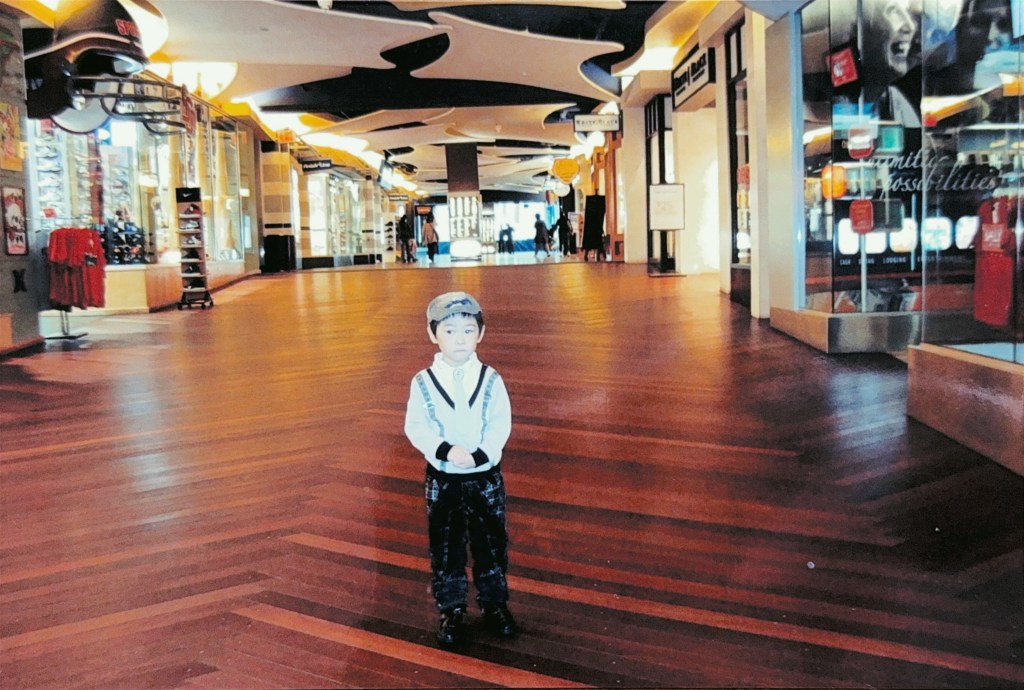
Photo 3: Matt wanders around the wooden boards on the first floor in an undated photo (likely from 2009 to 2010). Photo credit goes to my mother.
The third floor contains a wide variety of restaurants, the names of which I mostly remember, even if I had never eaten there. The first three restaurants that come to mind are the largest in the pier: Phillips Seafood, Buddakan, The Continental. Phillips is exactly what its name and appearance suggest: a casual seafood spot, complete with an enormous sculpture of a crab overlooking its entryway. Buddakan, an upscale Asian restaurant, is less obvious, hidden behind a set of black double doors at the end of a long, dimly-lit entryway. The Continental is perhaps the most unique of them all: it was modeled after a 1950s American diner, but with other retro touches, including a hexagonal conversation pit, small water pools and walkways, and brightly-colored lamps hanging from above. Taken together, this mix of restaurants perfectly embodies the magic of the Playground Pier: with their immersive design, unique theming, and mostly well-regarded food, one could easily forget they are in the pier, and even more forget that they are standing three stories above the Atlantic Ocean.
Continuing along the third floor, as we are finally about to reach the musical fountain, we pass by a row of white Adirondack chairs facing the windows. Though these chairs appear ordinary at first glance, as we approach them, we see that they are surrounded by fake reeds, but resting atop piles of real sand. So, if one ever wanted to experience the Atlantic City beach on a rainy day, they could simply head to the Playground Pier and indulge themselves on the “artificial” third-floor beach. Sure, it might seem tacky to some, but where else down the shore could you find a fake, indoor beach next to the real one?
At last, we approach the end of the pier, and the largest atrium of them all: the one that housed the pier’s signature “Water Show,” or what my parents and I simply and lovingly called “the musical fountain.” Indeed, down on the first floor stands a stunningly massive fountain, with more than a hundred multicolored jets of water shooting high into the air, while an audience gathers around the edge in collective amazement.
The lights beneath the fountain change from blue to red and back to blue, the beams of water reflecting a misty rainbow shining through the whole atrium. Behind the fountain is a set of six alternating escalators, seeming to move rhythmically with the water, and beyond those is a wide window out onto the open sea. It was nothing short of surreal, especially for my six-year-old self, whose sense of childlike wonder was renewed every time the jets of water reached their full height. As we continue staring into the fountain below, still astonished by such a sight, more crowds start to form as the top of the hour arrives. The jets of water suddenly recede—and just when the murmurs of the audience grow quiet, a loud melody starts to play from the speakers surrounding the atrium. The time has come for the namesake water show: at “every hour, on the hour,” the lights and water are synchronized to a song, rising and falling with every beat and rest. It was usually some jazz song that I never knew the name of but loved, to the point where I would beg my parents each hour to revisit the fountain, just to see it all over again.
And the magic never went away: as younger me watched the spirals of colorful water shoot all the way up to the third floor, music echoing and lights pulsing, what more could I have asked for? There was almost nothing in my naive, childlike universe that could compare. The Playground Pier was never just a playground to me, in the way that once you reach the end of the slide, you have to climb back up. The pier was a continuous cycle of amazement, whether by something as simple as a cozy, sunlit atrium or as awe-inspiring as the Water Show. The pier spoke to younger me with the same language I wanted to hear in the world: bright, warm, and comforting, with the early-2010s’ optimism that “everything will be alright.” And that was what I always thought, on every visit to AC: it didn’t matter if I had school, a talent show, or a baseball game the day after. As long as I was there, in the moment in the pier, I knew everything would turn out alright. And that was childhood.
Then reality struck the pier, and it wasn’t long before it struck me too.
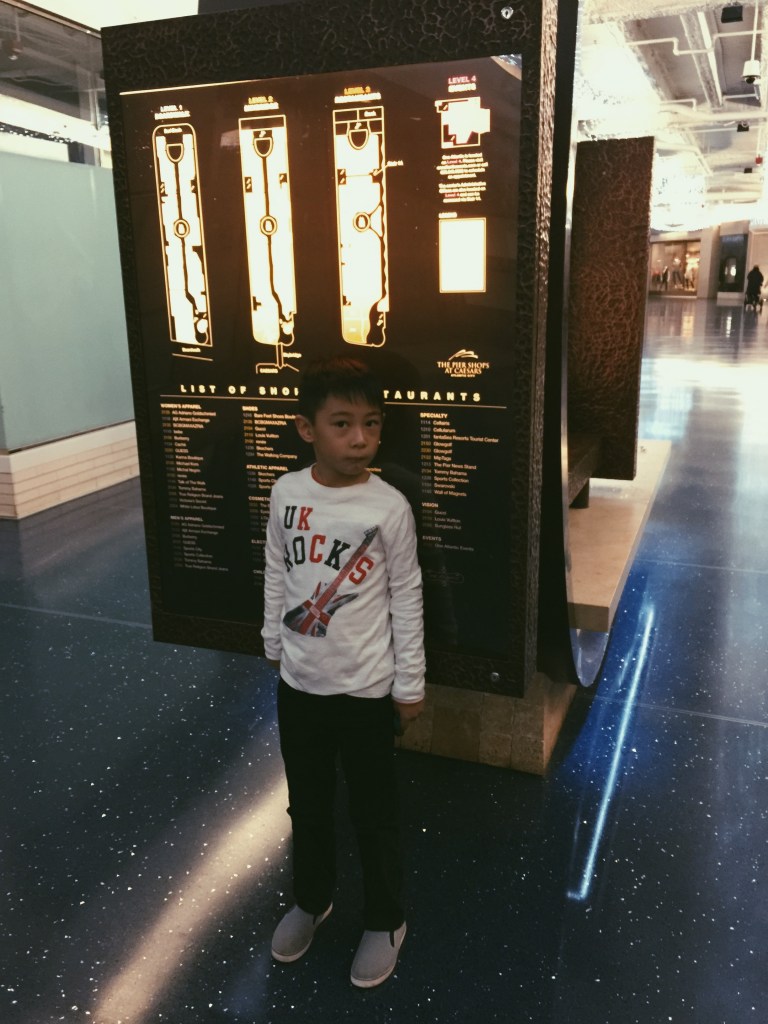
Photo 4: Eight-year-old Matt poses below a Playground Pier directory in November 2015. Photo credit again goes to my mother.
The Death of the Pier
As idyllic as that tour might have sounded, 2015 already marked the beginning of the end for the pier. And though the story of “how did the pier decline so quickly?” may seem tragically interesting, in all honesty, I do not remember much on how it all unfolded.
The most I have heard growing up in those years was that the new owners, who took control of the property in late 2015, immediately drove up the rent for each store in a rather short-sighted decision to make the pier more profitable. As a result, most of the stores had no choice but to close or relocate to the nearby Tanger Outlets Atlantic City, an outdoor shopping mall that is still surviving today. The owners also permanently tore down the musical fountain, one of the pier’s biggest draws, and forced out many tenants on the first floor to make room for a bar and nightlife district, one that ultimately never came to fruition. And although my childhood eyes never understood it, I was seeing the death of the pier in real time. It all unraveled so fast—hence this sudden “time skip” in the story—and before I knew it, both my childhood and much of the lifeblood of the pier was gone. And when the pandemic arrived in 2020, for the Playground Pier, I realized for the first time that there was never going back.
Fast forward two more years, to the summer of 2022. The pandemic was finally clearing up, and fourteen-year-old me was at last able to convince my parents to revisit Atlantic City. I told them how I wanted to relive that feeling of driving down the Expressway and being greeted by the neon-red Caesars sign, but deep down, there was nothing I wanted more than to walk through what remained of the Playground Pier—and feel like my younger self again. By then, the pier was suffocating more with every passing day, and people probably had long stopped telling others that the pier was a main reason to visit AC. But I was determined. Of course, the glow-in-the-dark mini golf, third floor restaurants, and musical fountain were all gone, but I wanted to glean anything I could in hopes of stirring up my oldest and happiest memories at the pier.
So on one humid, late-July day, we booked a room at Bally’s, packed our bags, and drove down the Expressway to AC like we had done probably a hundred times by now. Except this time, nothing was the same. The Bally’s room in the Dennis Tower felt more dated than ever and the entire hotel deader than ever. And when I stepped across that skybridge into the Playground Pier for the first time in who-knows-when, I saw what the place had become—and it sent chills down my spine. If my descriptions of the pier alive and well in 2015 seemed surreal, then seeing the pier in this near-abandoned, comatose state several years later completely redefined surreality.
Everything was still there, but the life was nowhere to be seen. The same storefronts remained, but the doors were double-padlocked and the windows were wrapped with black coverings. What I believed was once the White House Black Market was now reduced to an “Atlantic City Visitor Information” booth, except there were no visitors nor any employees there to give information. The only information I got from them was a paper hastily stuck to the front saying “temporarily closed,” with “temporarily” probably meaning multiple years.
And these grim images extended across the entire mall: it felt more like walking through a graveyard of stores than a “playground.” The only establishments left were the candy store, thanks to its first-floor location on the boardwalk, a sports store selling jerseys and other collectibles, and a “comedy club,” or perhaps the remnants of one. Still, all of that did not discourage me from venturing further into this waterfront graveyard.
Beyond the “shopping under the stars” section, whose sapphire stars were somehow still bright, the grand atrium was now a little less grand. The golden bead sculpture was removed, and the bar that once anchored the area at the bottom was now empty. At least the glass elevator was still functional, and riding it up and down for a few minutes revived the hope in me that “everything will be alright.” (Little did I know, on my next visit to AC one year later, the elevator would be dead too.) The furthest section of the pier, past the grand atrium, was completely dark and blocked off from the public. The first barrier was a towering, black curtain, and behind it, a temporary wall with a door that was firmly locked shut. I never got to see what hid beyond that door, and even if I did, the thumping of the security guard’s footsteps would’ve scared me back into the light.
Heading up the out-of-order escalators and onto the third floor, all three restaurants I described earlier were now skeletons of their former selves. Though all of them outlasted the stores, they all succumbed to the pandemic, shuttering their doors one day in 2020 and never opening again. Their signage, lighting, and decorations still stood (with the unfortunate exception of the plastic Phillips crab), but again, what good was that if there were no customers? The still water pools of the Continental had appeared to turn muddy green, possibly due to the decaying underwater lights, or maybe it was really just green. Either way, two sets of stanchions and ropes prevented me from going closer—one could really see by now how serious they were about not letting people simply relive their past. The once-thriving area around the musical fountain still looked the same, with the spotlights on the ceiling and the escalators behind all intact, except there was no fountain, and the escalators were at a standstill. All that stood was a wooden platform on the first floor, built in anticipation of performances that never came, and even those wooden boards seemed to be falling apart at the seams.
And to really drive home the point of existential reckoning, the moment I remembered the most from that visit was when “Bohemian Rhapsody” began playing at full blast over the speakers. Indeed, out of nowhere, in came Mercury’s distorted voice, echoing through the dusty speakers for a nonexistent audience. I am not making any of this up.
And for those next six minutes, I was fully convinced that I was dreaming, and everything I saw that day was a hyper-realistic hallucination. I was convinced that the pier was still alive and well, the musical fountain was still operating, and that I was a child again, not understanding the world but deeply in love with it. It took me nearly thirty minutes after the song ended—and another lap around the empty storefronts—to shake myself back into reality. Like I said before, I was never going to get this pier back. I was never going to get this childhood back. I was never going to get this playground back.
If there was any sign from the universe that it was time to move on, I saw it that day, on July 21st, 2022.
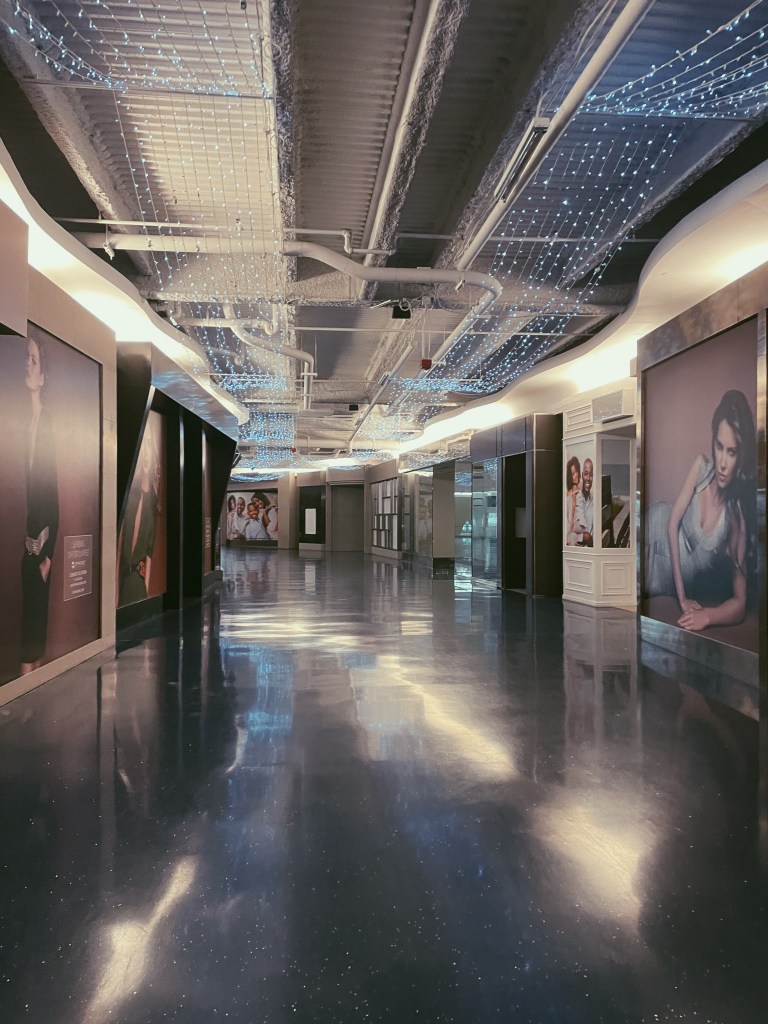
Photo 5: Another view of the empty “shopping under the stars” section from June 2023.
One year later, in June 2023, I returned to Atlantic City with my parents for another weekend, this time slightly more hopeful than the last. We stayed at Caesars this time instead of Bally’s, and it was refreshing to know that the guest floors of the Centurion Tower at Caesars still smelled like they used to (the “hotel smell,” as I called it). The pier looked almost the same as last year, but there were a few more people this time strolling its empty halls. Most of them looked like they were there for a reason: going for a peaceful walk, enjoying the silence, or also wondering what used to be there—and not that their phone was still stuck in 2013. Perhaps I was not alone in my morbid fascination with this moribund mall.
My faint hope from that year’s visit somewhat proved true: in late 2023, a spark of real hope finally appeared on the Playground Pier’s fading horizon. The pier was to undergo a change in ownership, and the new owners made it clear that they had huge ambitions for the place. No, they were not to revive it as a mall, as that would have been too obvious of a solution. They were instead intending for the pier to be the newest and largest movie studio in New Jersey—and perhaps even the entire Northeast. Gone were the days of the Playground Pier: enter ACX1 Studios. (Even until now, I still don’t know what the “X1” stands for.) Their plan was essentially to transform the pier into a state-of-the-art film production studio and eventually turn Atlantic City as a whole into the “Hollywood of the East Coast.” As far-fetched and idealistic as those plans sounded, I was still deeply excited, especially after having witnessed the pier rot before my eyes for seven years. Someone was finally bold enough to do something with the pier. And naturally, that meant I had to do some exploration.
Out of boredom one day, I decided to browse ACX1 Studios’s now-defunct website, with the hopes of seeing a tangible plan from them that could save the pier from the brink of total death. Yet the truth was far from what I had hoped: it quickly became evident that ACX1 Studios did not really know what they were doing. Desperately wanting to attract filmmakers to the pier, they had posted pictures of just about every space inside, from bathrooms to abandoned kitchens, labeling them as “premade film sets.” Of course, because everyone wants to shoot a bathroom scene for their next film in a deteriorating mall over the ocean. Outside the pier, even the decaying loading docks for the now nonexistent stores were designated as sets. It was almost farcical how desperate they were for any business, to the point where I felt pity for them—after all, if younger me were put in charge of reimagining the Playground Pier, one of my first ideas might’ve been a movie studio too. Nonetheless, my thoughts on ACX1 Studios quickly changed from “how quickly can they save the pier” to “how long could they last.”
Up until now, I revisited their socials every once in a while, and I could see that they really had tried all they could to salvage the pier. Beyond the movie-making business, which I presume was never profitable, ACX1 hosted concert nights, professional wrestling competitions, and even helped open a Jamaican restaurant under the grand atrium of the pier for a few months. Though much of the pier still stayed shuttered, it still brought some people back across the same skybridge and into the mall. And even if it’s not much, fifty visitors a day is better than none.
Now we enter the present. The flashback has finally concluded, and we are now standing on the boardwalk on this chilly October night, facing the glow of the ACX1 Studios sign—that is, if the sign is still there. Earlier this year, the inevitable had come for ACX1: after three years of struggling to make their dreams a reality, they, too, were confronted with the “real” reality of today’s world. As I had always expected, in March, many local news outlets reported ACX1’s declaration of Chapter 11 bankruptcy, once again placing the fate of the pier into unknown hands. And in the months since, few updates have arrived, and I do not even know what the pier looks like anymore since my last visit in November 2025. Maybe the lights are all off now. Maybe the wooden pilings beneath the pier will crumble and collapse at any minute. Or maybe, somewhere in Atlantic City or beyond, another visionary is piecing together their own plan to transform the pier into something special.
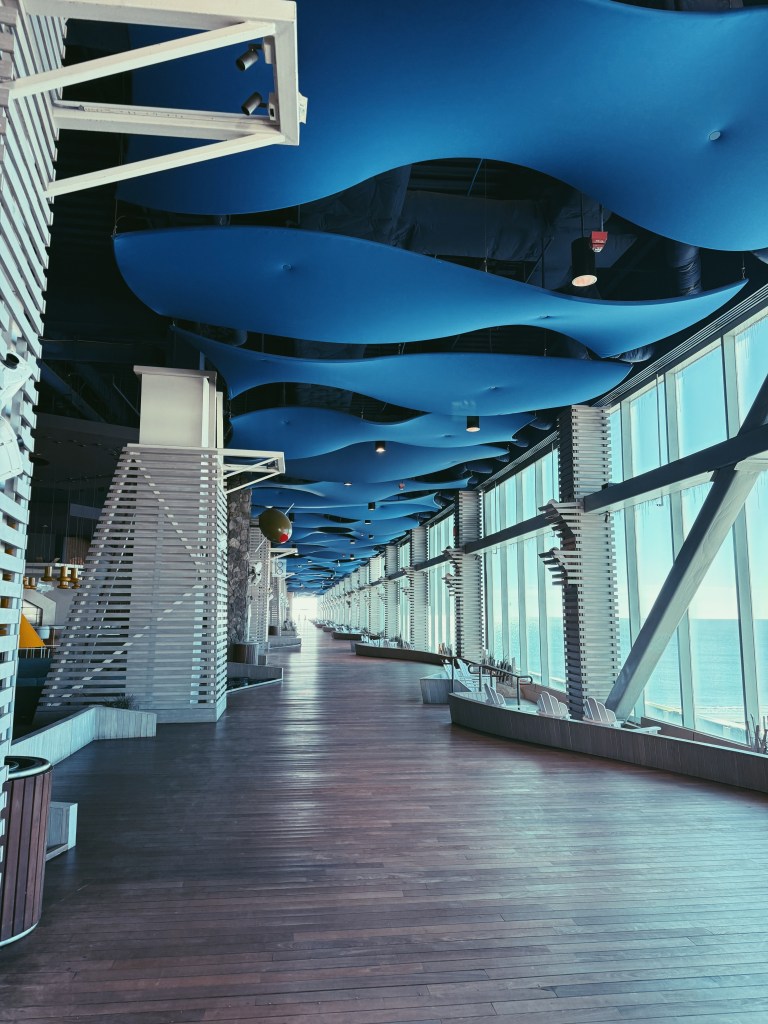
Photo 6: The empty third floor of the pier in November 2025, my latest visit. If you look closely, you can see that even the sand for the “artificial beach” is gone.
A Wonderland Lost
But in the end, we may never know what the future holds for my greatest, past wonderland. All I could take away from ACX1’s whole ordeal is that you could dream big, but those dreams can only take you so far in the face of reality. And isn’t that everyone’s life lesson growing up? That one learns to throw away their unrealistic, childish ambitions for more grown-up, mature thoughts? The Playground Pier has always held a place in my heart, from my childhood to today, because it embodied everything I wanted to see in this world. I wanted to see a place where fun, adventure, and possibility all intersect. And for a few years, it did, and in the most unlikely place: this waterfront mall in a city of gamblers straddling the Atlantic Ocean. Of course, at least we New Jerseyans now have the American Dream mall, but the “fun” I got from wandering around its glaringly white, eerily quiet halls never measured to that of the Playground Pier. Even in its dying years, the pier still held onto that last bit of that nostalgic and whimsical 2000s’ charm. From its colorful atrium to its starry lights, from its musical fountain to its limitless ocean views, the pier was a place for everyone. And it was especially the place for a curious child like me, still figuring out how to learn and walk in this world. So if there’s any “playground” in this universe that I wish I could step onto one more time, now as an eighteen-year-old college student, it’s the Playground Pier. It may never happen again, but that childlike hope I’ve carried since one is still burning strong.
And now, every time I stare into my college campus’s fountain, I close my eyes and listen to the sound of the cascading water. If I imagine just hard enough, I could hear the faint melody of the Water Show at the musical fountain, followed by the laughter of my childhood self, ready to come back the next hour and relive it all over again.
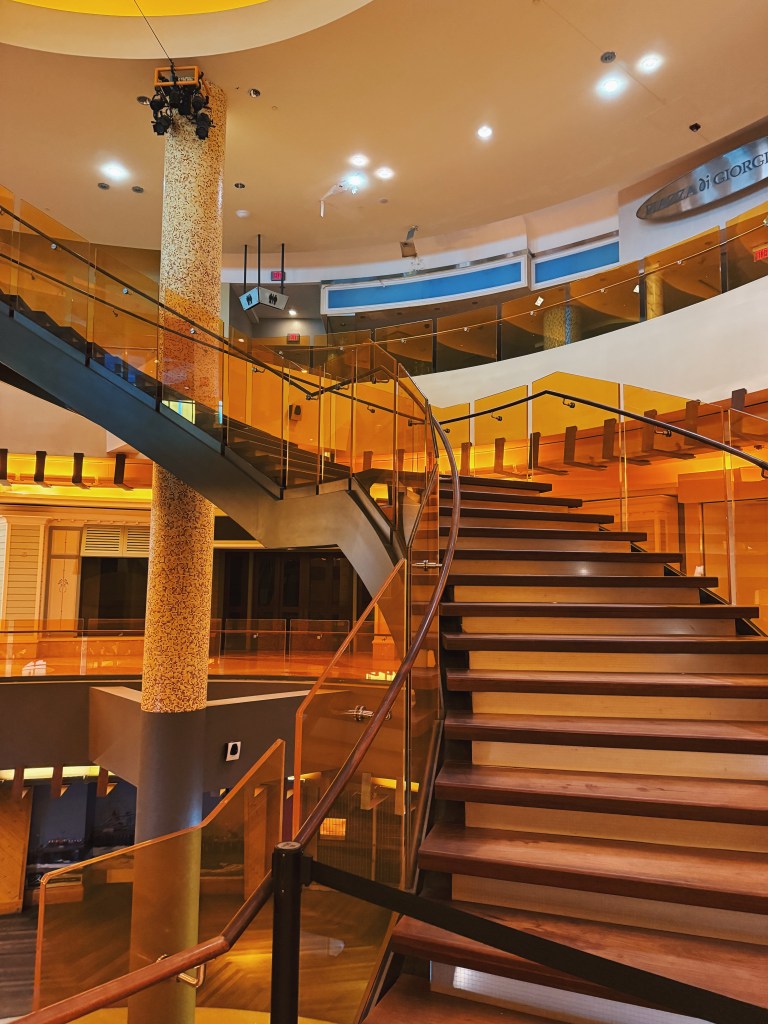
Photo 7: A nostalgic walk up the orange-tiled stairs of the grand atrium for probably the final time in November 2025.
Thank you for reading this post on Matt’s Journeys. If you enjoyed, please consider subscribing for more long-form essay posts like this one. ❀


Leave a Reply